The match Expression
match made a brief appearance in Control Flow as match(true), testing one condition after another against an HTTP status code. That was a useful trick, not match at its best. match shines when one value is compared against a small, known set of possibilities, and an enum is exactly that set.
Matching directly on an enum case
<?php
declare(strict_types=1);

enum Status: string
{
    case Pending = 'pending';
    case Shipped = 'shipped';
    case Cancelled = 'cancelled';
}

function nextAction(Status $status): string
{
    return match ($status) {
        Status::Pending => 'Pack the order',
        Status::Shipped => 'Notify the customer',
        Status::Cancelled => 'Issue a refund',
    };
}

echo nextAction(Status::Pending); // Pack the order
No true, no comparison operator, no range check. match ($status) compares the value in the parentheses with each arm using strict === comparison, and returns whatever stands right of the arrow on the first arm that fits. Read from top to bottom, the function is a table: one row per case, one answer per row.
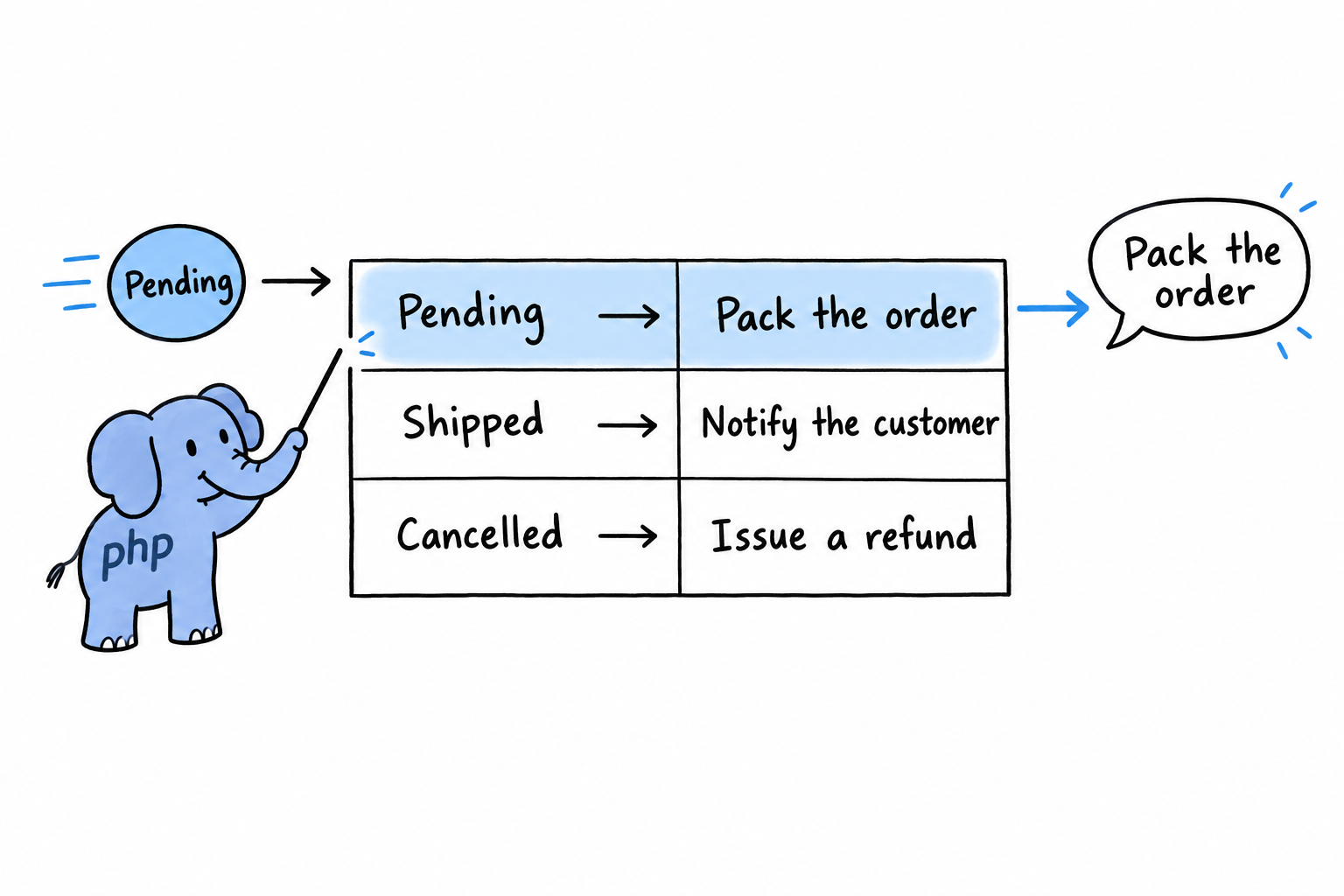
Notice the return in front of match. match is an expression: it produces a value you can return or assign, where switch and if only run code. That is why the whole function body fits in a single statement.
Multiple conditions per arm
An arm can list several values, separated by commas, and any one of them is enough:
<?php
declare(strict_types=1);

function isFinal(Status $status): bool
{
    return match ($status) {
        Status::Shipped, Status::Cancelled => true,
        Status::Pending => false,
    };
}

var_dump(isFinal(Status::Shipped));   // true
var_dump(isFinal(Status::Cancelled)); // true
var_dump(isFinal(Status::Pending));   // false
Status::Shipped, Status::Cancelled => true reads as “either of these, same answer”. It beats writing the arm twice, and it beats an || tucked inside a match(true).
Exhaustiveness is enforced
Here is what makes match more than a tidier switch. Every possible value has to be handled, by name or through a default arm. If none fits, match throws. Suppose the shop starts accepting returns:
<?php
declare(strict_types=1);

enum Status: string
{
    case Pending = 'pending';
    case Shipped = 'shipped';
    case Cancelled = 'cancelled';
    case Returned = 'returned'; // added later
}

function nextAction(Status $status): string
{
    return match ($status) {
        Status::Pending => 'Pack the order',
        Status::Shipped => 'Notify the customer',
        Status::Cancelled => 'Issue a refund',
        // forgot to add a Returned arm
    };
}

nextAction(Status::Returned); // UnhandledMatchError: Unhandled match case Status::Returned
The enum grew, the match did not, and the first time a returned order reaches nextAction() PHP raises an UnhandledMatchError on that exact line.
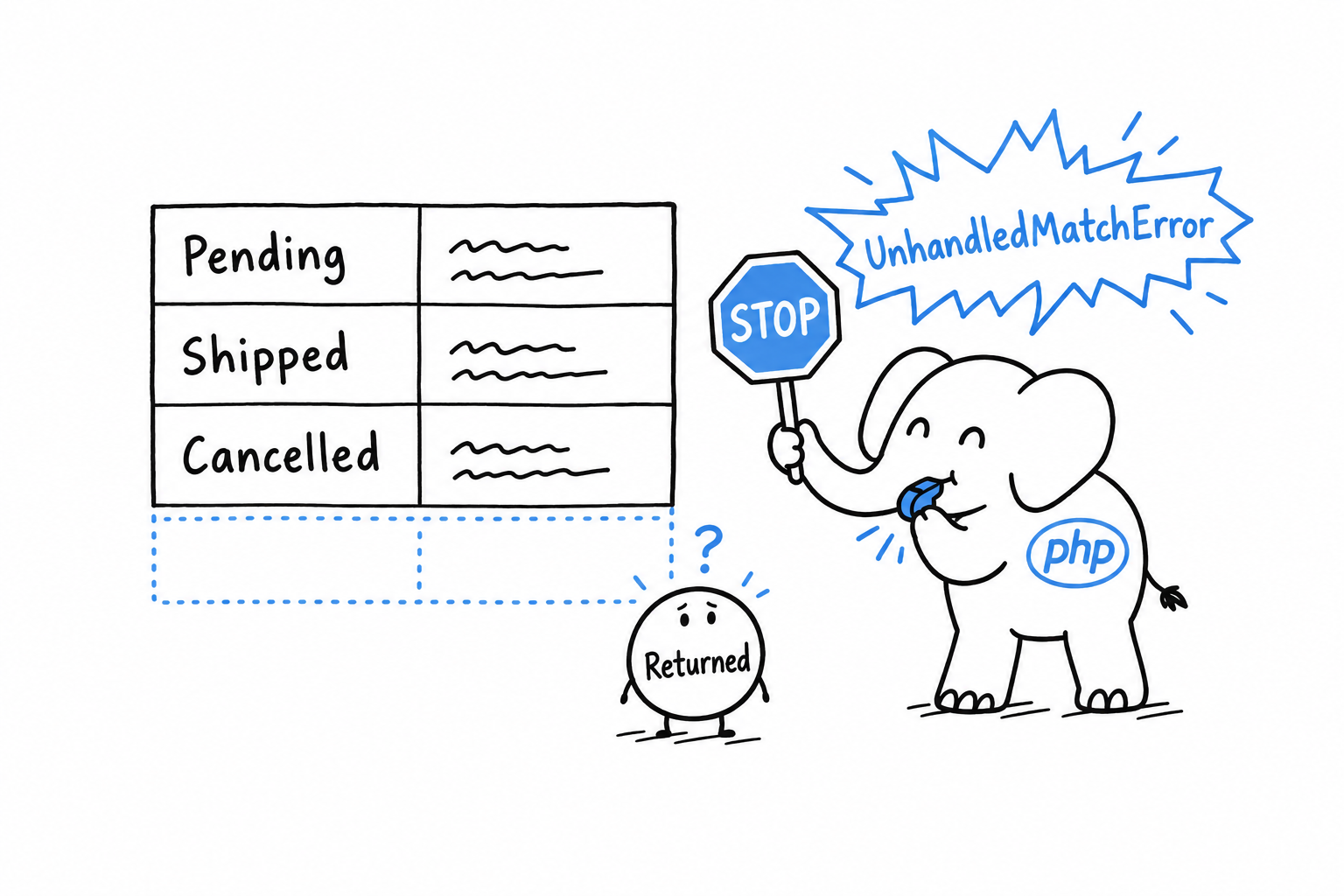
That looks harsh, and it is the feature. Add a case to an enum months from now, forget one of the match expressions that read it, and PHP names the place that needs updating. A switch with no matching branch does nothing and moves on. An if chain quietly runs its else for a value nobody planned. A match refuses.
Try it: add a Status::Returned => 'Restock the item' arm and run the file again.
When most cases really do share one fallback, add a default arm, as switch has always had. It catches everything not named above it, and tells the reader you chose to treat the rest alike rather than forgot.
A
matchwithoutdefaultis a promise to handle every case. PHP holds you to it.