Extending Composer with Scripts and Plugins
composer test and composer check are scripts you run yourself. Scripts have a second, quieter use. Attach one to a moment in Composer’s own lifecycle, and it runs by itself, at the right time, without anyone having to remember it.
Lifecycle events
Composer fires a named event at each stage of its work: before and after an install, before and after an update, and a few more. Use one of those names as the script key, instead of inventing your own, and Composer calls it when the moment comes:
{
    "scripts": {
        "post-install-cmd": "@php artisan-like-thing:setup",
        "post-update-cmd": [
            "@php bin/generate-config.php"
        ]
    }
}
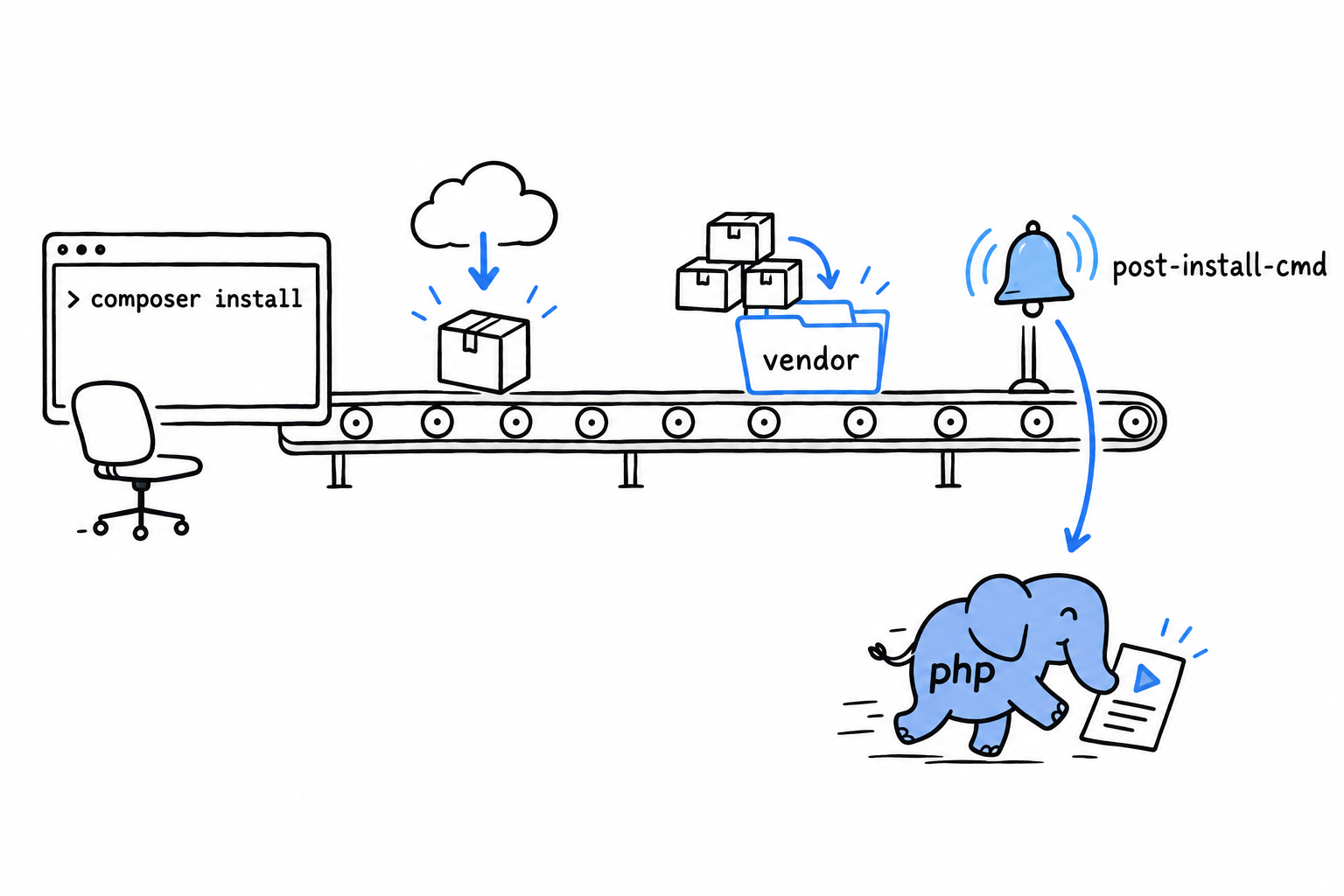
post-install-cmd runs after every composer install: a fresh clone fetching its dependencies, a CI job setting up before the tests, a new colleague on their first day. Nobody has to find the extra step buried in a README, because Composer performs it, in the right order, every time. post-update-cmd is the same hook for composer update. Other events exist for narrower moments, before a single package is installed or removed for instance, but these two cover most real needs: regenerating a config file, warming a cache, printing a reminder about an environment variable still to set.
Tip
The
@phpprefix runs the script with the same PHP binary Composer itself is running under. On a machine with several PHP versions installed, it removes any doubt about whichphpgets used.
Where scripts stop, and plugins start
A lifecycle script is a command Composer runs at a fixed point. That is useful, and that is all it is. Sometimes you want more: a new Composer command, a different way of installing packages, a reaction to an event written in real PHP logic rather than a fire-and-forget shell line. That is what plugins are for: ordinary Composer packages that hook into Composer’s internals, written in PHP, installed like any other dependency. You have probably used one without knowing it; the automatic .env handling in some frameworks is a Composer plugin under the hood.
Writing one is a legitimate thing to do, and it is real Composer-internals territory: event subscriber classes, Composer’s own plugin API, well beyond what this book covers. When lifecycle scripts stop being enough, that is the next door, and the official Composer documentation is the place to start.