Common Collections
A shopping list, a phone book, a stack of index cards, a row from a database. In most languages those are four different types. In PHP they are all one thing: an array.
You have been using arrays since Chapter 3, a $fruits = ["apple", "banana"] here, a foreach there, enough to keep an example moving. That was on credit. Arrays are the structure PHP programs are built out of, and they deserve to be understood properly, once, rather than picked up by osmosis.
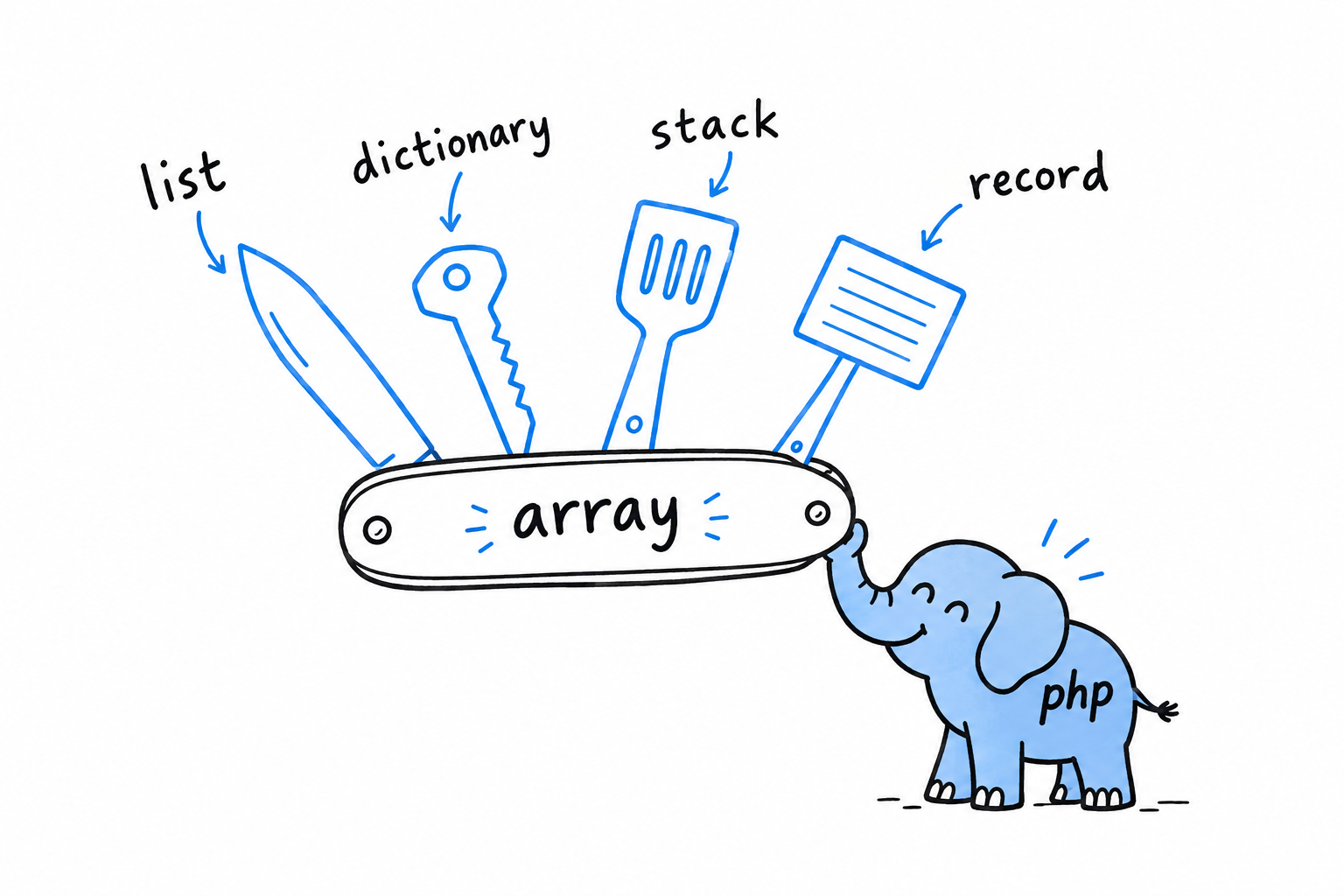
The reason one structure can do so much is the key to the whole chapter. A PHP array is always an ordered map: keys, each pointing at a value, kept in the order you added them. Use 0, 1, 2 as keys and it looks like a list. Use words and it looks like a dictionary. Underneath, nothing changed. Hold on to that fact and a lot of otherwise surprising behavior (why order is preserved, why array_filter() leaves gaps in the keys, why count() is instant) turns obvious.
A list and a dictionary are the same PHP array wearing different keys.
The chapter also stops on strings, and that is not a change of subject. Strings and arrays live side by side in everyday PHP: you split one into the other and glue arrays of strings back together all day long. And the moment a string holds anything beyond plain English (an accented name, a currency symbol, an emoji), you meet UTF-8, which PHP handles well, but only when asked correctly.
Indexed arrays come first, since you already have a feel for lists. Then strings, with an honest look at bytes versus characters, the distinction that trips up nearly everyone once. Then associative arrays, where keys you choose yourself turn the same structure into a small, flexible record.